Made In USA✦For Laboratory Research Only✦COAs Not Yet Available✦Explore Compound Research Profiles✦Compare Catalog Sizes✦Research Requests Reviewed Individually✦Not For Human Or Veterinary Use✦
Made In USA✦For Laboratory Research Only✦COAs Not Yet Available✦Explore Compound Research Profiles✦Compare Catalog Sizes✦Research Requests Reviewed Individually✦Not For Human Or Veterinary Use✦
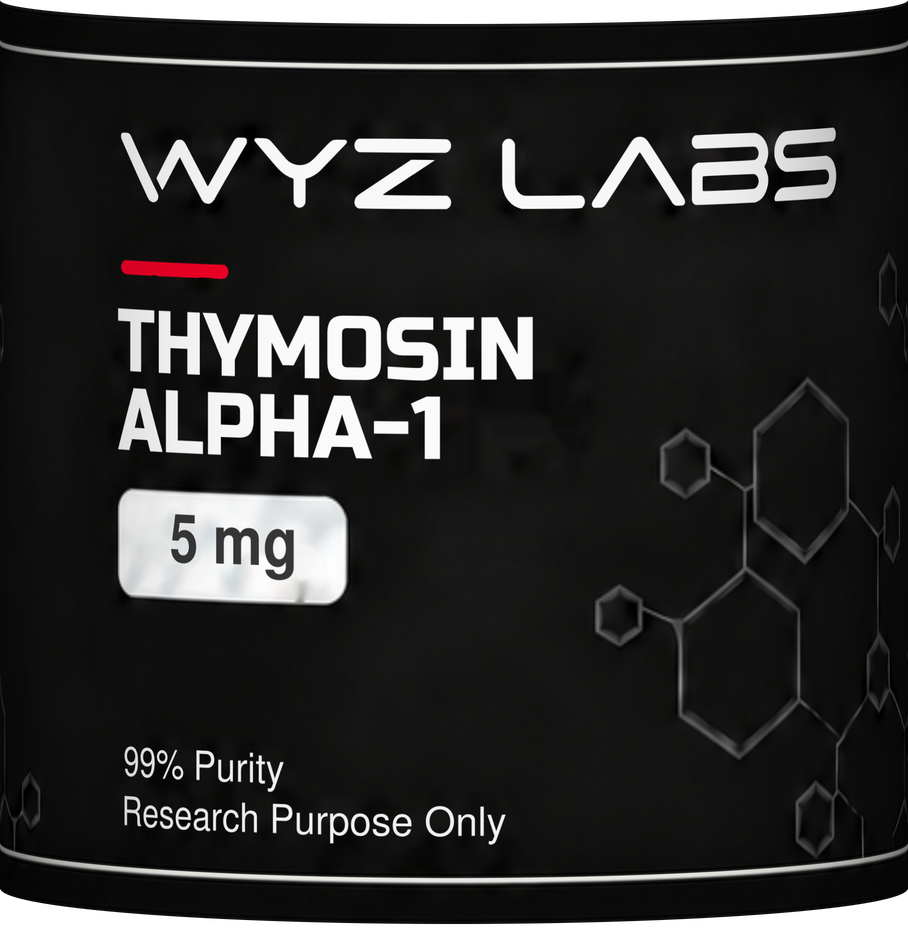
Thymosin alpha-1 is a 28-residue peptide investigated in immune-cell signaling and clinical immunomodulation, with promising experimental findings but a negative large sepsis trial.
Thymosin alpha-1 was originally isolated and sequenced as an immunologically active thymic peptide containing 28 amino acids. It is a distinct molecule from thymosin beta-4 and should not inherit beta-thymosin tissue-repair claims. Studies of a defined synthetic clinical preparation do not verify a separately supplied catalog material.
Reference identity
Research class
Immunomodulatory peptide
Catalog search names
TA1 · Thymosin alpha 1
Residue count
28 amino acids
This reference describes the published literature. Exact supplied form and chemical specifications require product-specific documentation. The studies are linked in Selected literature.
Mechanisms under investigation
Experimental work links thymosin alpha-1 to changes in dendritic-cell maturation, cytokine production, and interactions between innate and adaptive immunity. In specific fungal models, investigators implicated Toll-like-receptor-associated signaling and downstream pathways. This is a context-dependent immunomodulatory account, rather than proof of uniform immune stimulation in every organism or disease.
Documented lines of inquiry
Research areas
01
Peptide identity and immune activity
The original isolation study established a defined sequence within a broader thymic extract and associated the peptide with immune activity. It provides historical molecular grounding, without establishing a single modern receptor mechanism or a general clinical indication. [1]
02
Dendritic cells and antifungal responses
Cell experiments and a susceptible mouse transplantation model examined dendritic-cell function and antifungal immunity. Protective findings were specific to that experimental system, and cannot be treated as evidence that arbitrary infections or human immune deficiencies will respond similarly. [2]
03
Sepsis outcomes
The multicenter TESTS trial evaluated thymosin alpha-1 in adults with sepsis and did not find a clear reduction in its primary 28-day mortality outcome. This large controlled result is essential context for interpreting earlier mechanistic enthusiasm or smaller clinical studies. [3]
Study topics describe the cited models, not established benefits of this catalog material.
The evidence spans biochemical identification, immune-cell and mouse experiments, and a large randomized human trial. These layers establish research relevance but do not converge on a blanket clinical benefit. The negative primary sepsis result should not be obscured by exploratory subgroup signals.
What remains uncertain
Immune effects depend on disease, timing, cell state, and the measured endpoint. A laboratory cytokine change is not equivalent to fewer infections or improved survival. None of the cited work provides WYZ Labs purity, manufacturing, COA, or clinical-equivalence evidence.
— Read the source
Selected literature
Primary studies and clearly identified supporting sources. Each link opens the original record.
Literature reviewed October 2026. This is a selected research overview, not an exhaustive systematic review. Published findings do not establish the identity, purity, sterility or suitability of any WYZ batch. For laboratory research only; not for human or veterinary use.
— Before you begin
The details behind the material.
Specifications and storage
Final product specifications and product-specific storage instructions have not been supplied. Review the original documentation and your laboratory’s procedures before obtaining or using the material.
Research use only
For qualified laboratory researchers. Not for human or veterinary use. Product information is not medical advice or a recommendation for personal use.
Retatrutide is a synthetic peptide studied for coordinated activation of three metabolic hormone receptors, with human research examining glucose regulation, appetite, body weight and liver fat.
MOTS-c is a mitochondrial-derived peptide studied in metabolic signaling and skeletal-muscle adaptation, with experimental interventions supported mainly by cell and animal evidence.
GHK-Cu is a copper complex of glycyl-histidyl-lysine studied for its effects on extracellular-matrix production and remodeling in experimental tissue-repair systems.