Made In USA✦For Laboratory Research Only✦COAs Not Yet Available✦Explore Compound Research Profiles✦Compare Catalog Sizes✦Research Requests Reviewed Individually✦Not For Human Or Veterinary Use✦
Made In USA✦For Laboratory Research Only✦COAs Not Yet Available✦Explore Compound Research Profiles✦Compare Catalog Sizes✦Research Requests Reviewed Individually✦Not For Human Or Veterinary Use✦
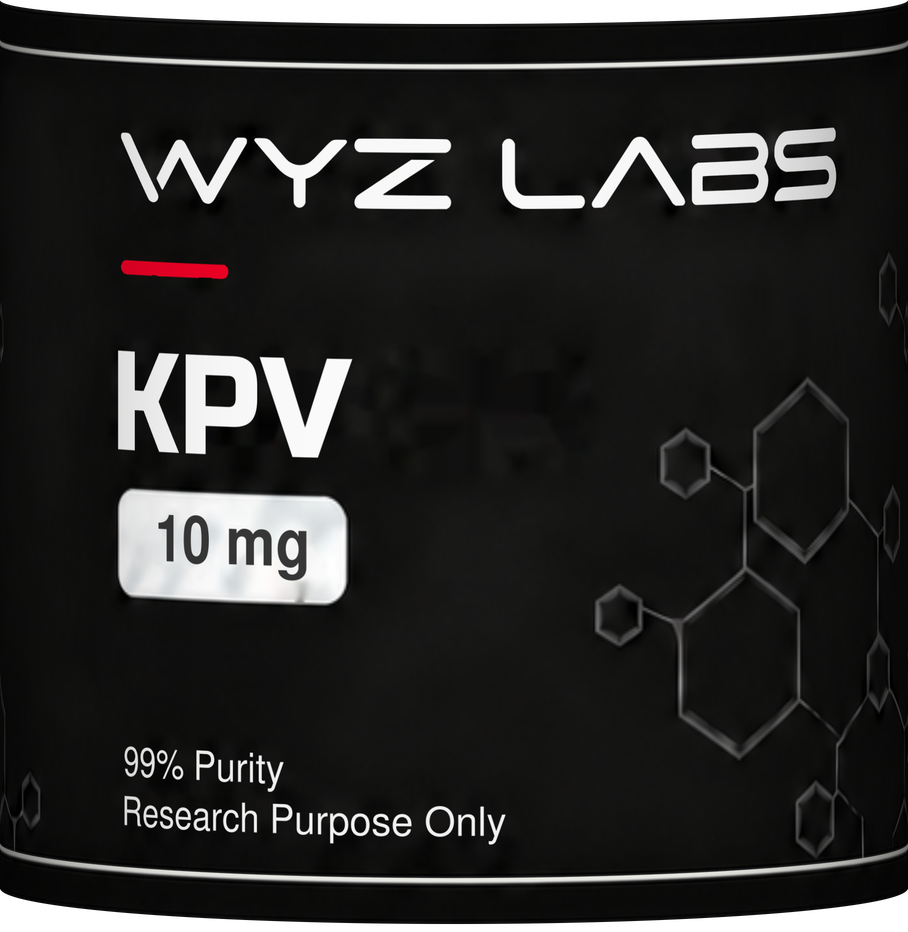
KPV denotes the amino acids lysine, proline, and valine, corresponding to the final three residues of alpha-melanocyte-stimulating hormone. Studying this short fragment does not make it interchangeable with the complete hormone. Most relevant evidence concerns cultured cells and experimental intestinal inflammation in mice.
Reference identity
Research class
Alpha-MSH-derived tripeptide
Sequence
Lysine–proline–valine
Parent region
Final three residues of alpha-MSH
This reference describes the published literature. Exact supplied form and chemical specifications require product-specific documentation. The studies are linked in Selected literature.
Mechanisms under investigation
A mechanistic study identified uptake through the peptide transporter PepT1 in intestinal epithelial and immune-cell models, followed by reduced activation of inflammatory signaling pathways including NF-kappaB and MAP kinases. Separate mouse experiments suggest that some effects can occur without a functional melanocortin-1 receptor.
Documented lines of inquiry
Research areas
01
Cellular transport and signaling
Experiments using epithelial cell lines and a T-cell line linked KPV transport to reduced inflammatory responses. These systems help examine how access to intracellular compartments affects activity; human-derived cells are not evidence from treated human participants. [1]
02
Experimental colitis
A study using chemically induced and immune-cell-transfer colitis reported changes in weight recovery, inflammatory infiltrates, and tissue injury. Findings in mice lacking functional melanocortin-1 receptors supported investigation of mechanisms beyond that receptor alone. [2]
03
Targeted delivery
Researchers incorporated KPV into hyaluronic-acid-functionalized nanoparticles to investigate delivery to inflamed intestinal tissue. The resulting mouse findings concern an engineered formulation, so they cannot be assigned automatically to free KPV or a different preparation. [3]
Study topics describe the cited models, not established benefits of this catalog material.
Reading the evidence
What the studies can tell us.
Cell and animal evidence; clinical efficacy unestablished
The cited work supports preclinical investigation of transport, local inflammatory signaling, and formulation design. It does not demonstrate treatment of human inflammatory bowel disease. Reduced inflammatory markers and improved mouse disease scores remain intermediate evidence rather than established clinical outcomes.
What remains uncertain
Transporter expression, disease model, tissue exposure, and delivery system can substantially change experimental results. The presence of a fragment within a natural hormone does not establish the safety or effectiveness of supplying that fragment separately. No cited study validates a WYZ Labs formulation or proves benefit in people.
— Read the source
Selected literature
Primary studies and clearly identified supporting sources. Each link opens the original record.
Literature reviewed October 2026. This is a selected research overview, not an exhaustive systematic review. Published findings do not establish the identity, purity, sterility or suitability of any WYZ batch. For laboratory research only; not for human or veterinary use.
— Before you begin
The details behind the material.
Specifications and storage
Final product specifications and product-specific storage instructions have not been supplied. Review the original documentation and your laboratory’s procedures before obtaining or using the material.
Research use only
For qualified laboratory researchers. Not for human or veterinary use. Product information is not medical advice or a recommendation for personal use.
Retatrutide is a synthetic peptide studied for coordinated activation of three metabolic hormone receptors, with human research examining glucose regulation, appetite, body weight and liver fat.
MOTS-c is a mitochondrial-derived peptide studied in metabolic signaling and skeletal-muscle adaptation, with experimental interventions supported mainly by cell and animal evidence.
GHK-Cu is a copper complex of glycyl-histidyl-lysine studied for its effects on extracellular-matrix production and remodeling in experimental tissue-repair systems.