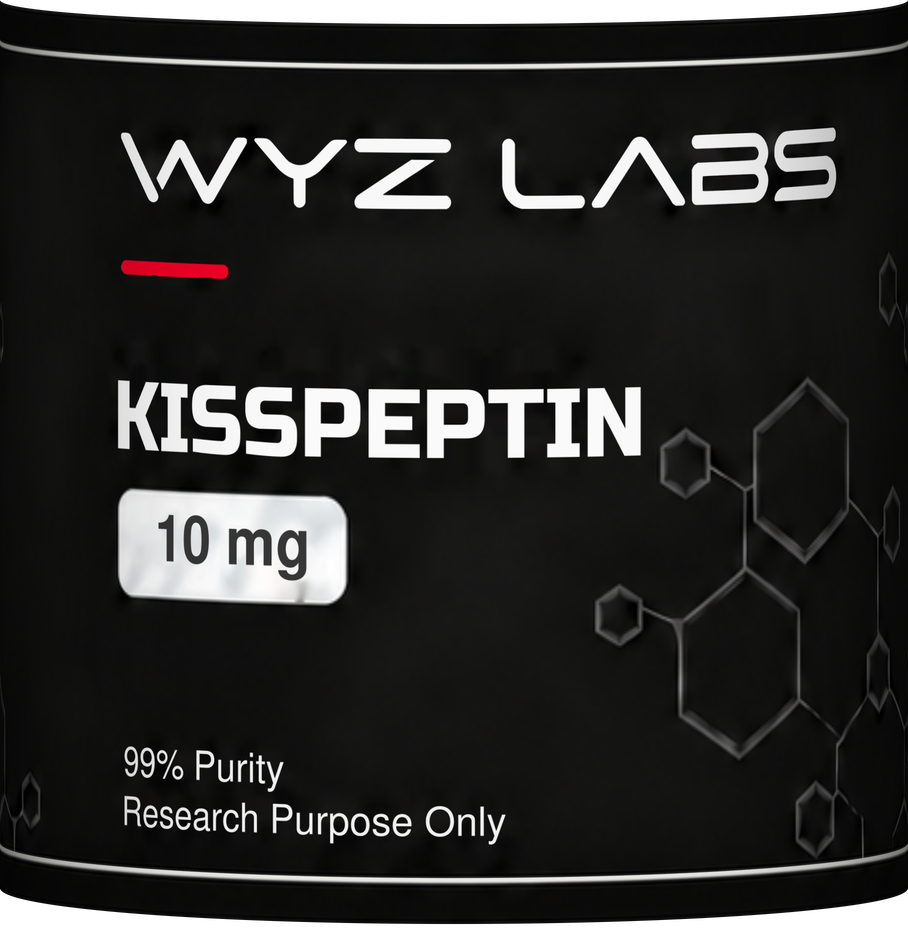
What is Kisspeptin?
Kisspeptins are peptides derived from the KISS1 precursor, including forms distinguished by sequence length. The catalog states that its exact sequence awaits confirmation. A listed material amount does not identify whether the molecule is kisspeptin-10, kisspeptin-54, or another form, and those designations must not be treated as interchangeable product specifications.
Reference identity- Research class
- KISS1-derived peptide family; sequence pending
- Sequence status
- Exact sequence pendingExplicit supplied-identity limitation
- Family origin
- KISS1 precursor
This reference describes the published literature. Exact supplied form and chemical specifications require product-specific documentation. The studies are linked in Selected literature.
Mechanisms under investigation
Kisspeptin signaling through KISS1R acts upstream of gonadotropin-releasing hormone and the pituitary gonadotropins LH and FSH. Its effects depend on reproductive and hormonal context. Studies of pulse patterns, ovarian responses, and different peptide forms therefore address related but distinct physiological questions.
Documented lines of inquiryResearch areas
- 01
LH pulse physiology
A human study specifically using kisspeptin-10 measured acute LH responses and increased pulse frequency in men. It supports that defined peptide as an endocrine research probe, without identifying the unspecified catalog material as the same compound. [1]
- 02
Oocyte maturation
An IVF study specifically evaluated kisspeptin-54 in women receiving controlled ovarian stimulation. Mature oocytes and subsequent reproductive outcomes were observed within that clinical setting. The findings depend on the defined peptide and the wider fertility-treatment protocol. [2]
- 03
Hypothalamic amenorrhea
A small study of kisspeptin-54 in women with hypothalamic amenorrhea investigated temporary changes in LH pulsatility. Individual responses varied. This provides a mechanistic signal rather than proof of durable restoration of fertility or equivalence across kisspeptin forms. [3]
Study topics describe the cited models, not established benefits of this catalog material.
Reading the evidence
What the studies
can tell us.
Human evidence for defined forms; catalog identity unresolvedBoth kisspeptin-10 and kisspeptin-54 have direct human research literature. Those papers cannot serve as direct material-specific evidence until the catalog sequence is known. Peptide length, experimental exposure, reproductive state, and the chosen endpoint all influence interpretation of the results.
What remains uncertain
Confirm sequence, terminal chemistry, and the intended kisspeptin form before assigning molecular identifiers or making paper-to-material comparisons. The references do not establish that this catalog entry reproduces the clinical preparations, nor do they support a general claim about fertility, hormone balance, or sexual function.