Made In USA✦For Laboratory Research Only✦COAs Not Yet Available✦Explore Compound Research Profiles✦Compare Catalog Sizes✦Research Requests Reviewed Individually✦Not For Human Or Veterinary Use✦
Made In USA✦For Laboratory Research Only✦COAs Not Yet Available✦Explore Compound Research Profiles✦Compare Catalog Sizes✦Research Requests Reviewed Individually✦Not For Human Or Veterinary Use✦
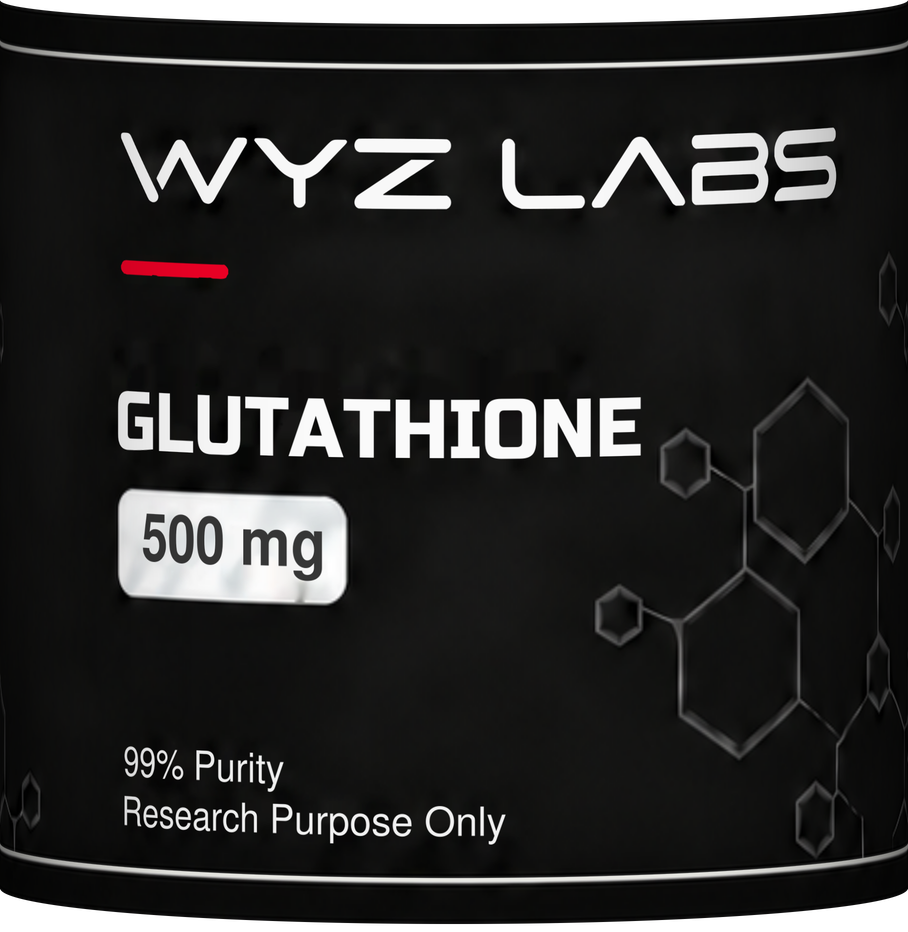
Glutathione is an endogenous tripeptide involved in redox balance, with human supplementation studies reporting variable changes in glutathione pools and metabolic biomarkers.
Glutathione contains glutamate, cysteine and glycine. Its reduced form, GSH, and oxidized disulfide form, GSSG, are commonly measured together when studying cellular redox state. The molecule's normal physiological importance should be distinguished from evidence about the effects of externally supplied glutathione.
Reference identity
Research class
Endogenous thiol tripeptide
Peptide constituents
Glutamate, cysteine and glycine
Forms distinguished in research
Reduced GSH and oxidized disulfide GSSGRelated redox forms in the literature; the supplied form is unconfirmed
This reference describes the published literature. Exact supplied form and chemical specifications require product-specific documentation. The studies are linked in Selected literature.
Mechanisms under investigation
The cysteine thiol participates in reactions that help manage peroxides and other reactive compounds, and glutathione-dependent enzymes connect these reactions with broader cellular metabolism. Measurements of total glutathione, reduced glutathione and the GSH-to-GSSG relationship describe different aspects of this system rather than a single interchangeable antioxidant score.
Documented lines of inquiry
Research areas
01
Body-compartment stores
A six-month randomized study in 54 adults reported increases in glutathione in several sampled compartments during oral supplementation. This supports an effect on measured stores under those conditions, without establishing treatment of a particular disease or benefit from a different formulation. [1]
02
Oxidative-stress biomarkers
A separate four-week placebo-controlled trial in healthy volunteers found no significant changes in the measured oxidative-stress markers or glutathione status. The result demonstrates that biochemical effects are not uniform across study settings, durations and participant groups. [2]
03
Insulin-sensitivity research
A small randomized study of men with obesity, with or without type 2 diabetes, examined insulin sensitivity and muscle-related measurements. It reported improved insulin sensitivity without corresponding improvement in the selected oxidative-stress markers, illustrating that different endpoints can diverge. [3]
Study topics describe the cited models, not established benefits of this catalog material.
Reading the evidence
What the studies can tell us.
Human biomarker trials with mixed results
The selected trials investigate biological responses in humans, but their sample sizes and endpoints differ. They are stronger evidence for the specific measurements reported than for general claims about detoxification, immunity, longevity or disease prevention.
What remains uncertain
Blood measurements may not represent every tissue, and altered glutathione stores do not automatically imply a meaningful clinical outcome. Oral trial results cannot be transferred to injectable preparations or other delivery systems. These studies neither characterize the WYZ material nor establish its suitability or equivalence for human use.
— Read the source
Selected literature
Primary studies and clearly identified supporting sources. Each link opens the original record.
Literature reviewed October 2026. This is a selected research overview, not an exhaustive systematic review. Published findings do not establish the identity, purity, sterility or suitability of any WYZ batch. For laboratory research only; not for human or veterinary use.
— Before you begin
The details behind the material.
Specifications and storage
Final product specifications and product-specific storage instructions have not been supplied. Review the original documentation and your laboratory’s procedures before obtaining or using the material.
Research use only
For qualified laboratory researchers. Not for human or veterinary use. Product information is not medical advice or a recommendation for personal use.
Retatrutide is a synthetic peptide studied for coordinated activation of three metabolic hormone receptors, with human research examining glucose regulation, appetite, body weight and liver fat.
MOTS-c is a mitochondrial-derived peptide studied in metabolic signaling and skeletal-muscle adaptation, with experimental interventions supported mainly by cell and animal evidence.
GHK-Cu is a copper complex of glycyl-histidyl-lysine studied for its effects on extracellular-matrix production and remodeling in experimental tissue-repair systems.