Made In USA✦For Laboratory Research Only✦COAs Not Yet Available✦Explore Compound Research Profiles✦Compare Catalog Sizes✦Research Requests Reviewed Individually✦Not For Human Or Veterinary Use✦
Made In USA✦For Laboratory Research Only✦COAs Not Yet Available✦Explore Compound Research Profiles✦Compare Catalog Sizes✦Research Requests Reviewed Individually✦Not For Human Or Veterinary Use✦
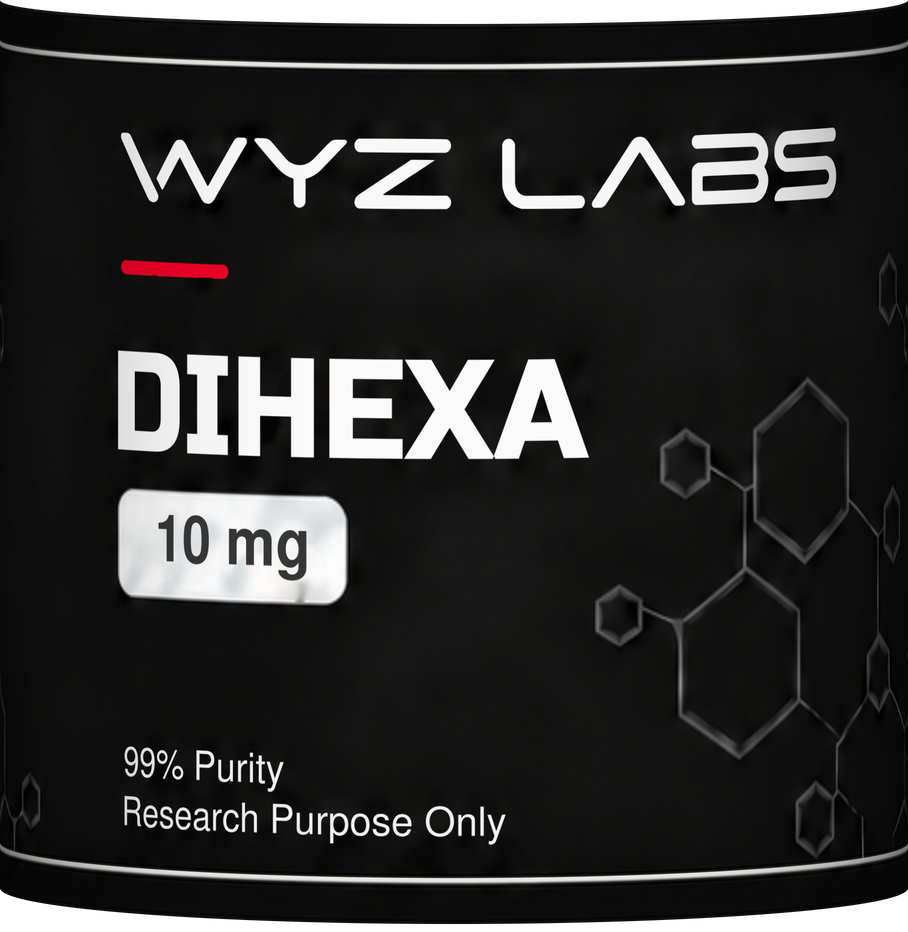
Dihexa is an experimental peptidomimetic with preclinical neural findings, but retraction of a central mechanism paper substantially complicates interpretation.
Dihexa is a chemically modified angiotensin IV-related compound developed to improve metabolic stability in experimental systems. It is a peptidomimetic rather than intact angiotensin IV. Early investigations explored neuronal cultures, animal behavior, and pharmacological properties; these do not constitute demonstrated cognitive benefit in humans.
This reference describes the published literature. Exact supplied form and chemical specifications require product-specific documentation. The studies are linked in Selected literature.
Mechanisms under investigation
Dihexa has been described as a modulator of hepatocyte growth factor signaling through c-Met. However, the influential 2014 paper presenting that mechanistic account was retracted in 2025 following findings of fabricated or falsified data. It cannot serve as valid proof of the proposed mechanism.
Documented lines of inquiry
Research areas
01
Neuronal and behavioral models
The 2013 development paper reported synaptic changes in hippocampal cultures and behavioral findings in rat models, including pharmacologically impaired and aged animals. These model-specific observations require independent confirmation and do not establish dementia treatment. [1]
02
Sensory-cell injury
A zebrafish study reported protection of lateral-line hair cells during some acute aminoglycoside exposures. Protection did not generalize to every tested injury condition, making this a narrow experimental observation rather than evidence for human hearing preservation. [2]
03
Integrity of mechanistic evidence
The publisher's 2025 retraction notice specifically invalidates a widely cited HGF/c-Met study. The notice materially weakens the scientific foundation for confident claims about Dihexa's target engagement and proposed synapse-promoting mechanism. [3]
Study topics describe the cited models, not established benefits of this catalog material.
Reading the evidence
What the studies can tell us.
Preclinical findings; central mechanism paper retracted
The cited experimental reports contain no controlled human efficacy trial. Their presence in the literature does not resolve reproducibility or the consequences of the retracted mechanistic work. Observations in rodents and zebrafish should therefore be presented as provisional findings with a substantial evidence-quality concern.
What remains uncertain
The retraction must remain visible wherever the mechanism is discussed. Results from different animal systems do not establish human exposure, cognitive outcomes, or long-term safety. Published research compounds also cannot establish the composition or performance of a separately supplied WYZ Labs material.
— Read the source
Selected literature
Primary studies and clearly identified supporting sources. Each link opens the original record.
Literature reviewed October 2026. This is a selected research overview, not an exhaustive systematic review. Published findings do not establish the identity, purity, sterility or suitability of any WYZ batch. For laboratory research only; not for human or veterinary use.
— Before you begin
The details behind the material.
Specifications and storage
Final product specifications and product-specific storage instructions have not been supplied. Review the original documentation and your laboratory’s procedures before obtaining or using the material.
Research use only
For qualified laboratory researchers. Not for human or veterinary use. Product information is not medical advice or a recommendation for personal use.
Retatrutide is a synthetic peptide studied for coordinated activation of three metabolic hormone receptors, with human research examining glucose regulation, appetite, body weight and liver fat.
MOTS-c is a mitochondrial-derived peptide studied in metabolic signaling and skeletal-muscle adaptation, with experimental interventions supported mainly by cell and animal evidence.
GHK-Cu is a copper complex of glycyl-histidyl-lysine studied for its effects on extracellular-matrix production and remodeling in experimental tissue-repair systems.